Molotschna Council of Elders
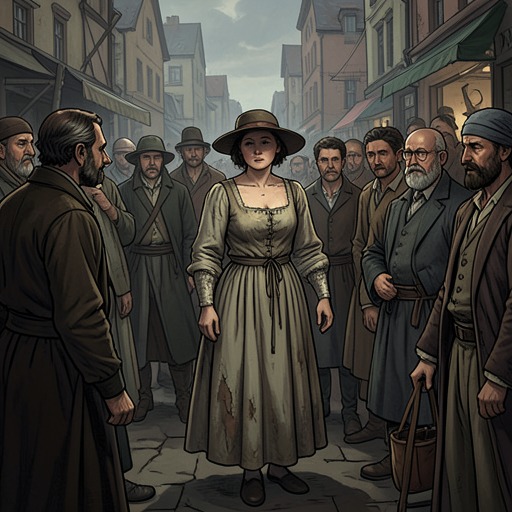
Women TalkingThe Molotschna Council of Elders is a religious and governing authority in the self-policed Molotschna Colony. During the crisis over the attacks on women, it helped determine how the accused men would be handled and upheld a rule linking the women’s forgiveness to their continued place in the colony. Its role reveals a sharp divide between community discipline administered by male leaders and the women’s efforts to interpret their faith and decide how to protect themselves and their children.
Authority and Community Discipline
Molotschna is described as self-policed, and the Council of Elders operates within that local system of authority. At first, Peters planned to confine the accused men in a shed for decades. When it became clear that the men’s lives were in danger, Peters and the elders instead decided to call the police. The men were taken to the city, ostensibly for their own safety. This was an exceptional step: the police had never previously been called to the colony.
The decision followed violence and disorder within the community. Salome Friesen attacked one of the accused men with a scythe, and male relatives of the victims hanged another man, who died after they passed out nearby. The elders’ intervention therefore shifted the case from threatened confinement and vigilante violence to police custody and the city’s legal process. Community authority did not disappear, however: the response to the men’s return remained tied to the colony’s religious and social rules.
Forgiveness, Return, and the Threat of Expulsion
While the men were imprisoned, the other men of the colony went to the city to post bail, hoping the accused would return to Molotschna while awaiting trial. Peters presented the women with a stark consequence: when the men returned, the women would have the opportunity to forgive them, thereby securing everyone’s place in heaven. If they refused, the women would have to leave for an outside world they knew nothing about. They had only two days to organize a response.
This arrangement made forgiveness more than a personal or spiritual choice. It was presented as a condition of belonging, with expulsion as the consequence of refusal. The Council’s approach thus joined religious doctrine to control over residence and community membership. Salome Friesen later asked Peters and the elders to forgive her for her attack on one of the accused men, which the account describes as an indiscretion. Her request shows that the same authority to which the women were expected to extend forgiveness also received petitions for forgiveness from within the community.
The Women’s Religious Challenge
As the women debated whether to stay, fight, or leave, they did not simply reject their faith. Agata Friesen argued that remaining would expose the women to further violence and risk turning the colony into a battlefield. In her reading, leaving was the choice that best upheld Mennonite pacifism. Ona Friesen likewise connected the decision to protecting themselves and their children, bearing witness to their faith, and teaching their children values that might differ from their fathers’ expectations.
The women also questioned who had the authority to say what the Bible required. Salome Friesen pointed out that women could not read the Bible for themselves and that their belief that wives must submit to husbands came through what their husbands told them the Bible said. Her challenge places the Council’s authority within a broader system in which men interpret religious rules for women who have been denied independent access to the text. The women’s deliberations become an effort to judge religious teaching through their own understanding of pacifism, love, forgiveness, and care.
Limits and Consequences of the Council’s Authority
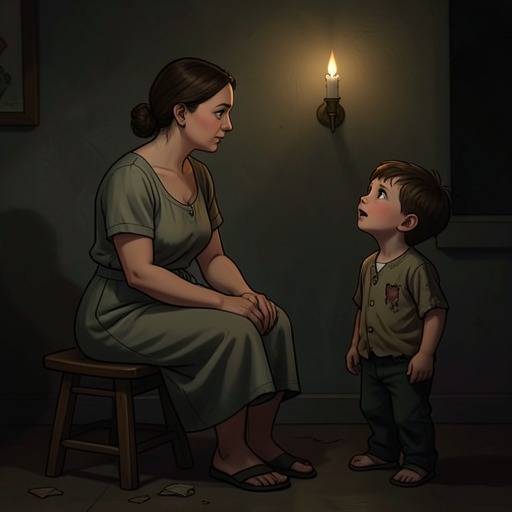
The elders’ judgments also shape the treatment of women whose circumstances are marked by stigma or vulnerability. When Ona Friesen became pregnant after the attacks, several women hurriedly attempted to arrange her marriage to Julius Penner. Ona refused, saying that her condition of Narfa would taint him and that he deserved better. The elders concluded that Narfa had left her incapable of reasoning and beyond redemption; they also intended for her unborn child to be raised by another colony family, possibly the family of one of the attackers. These decisions show religious leadership reaching into a woman’s standing, marriage prospects, and the future care of her child.
The women’s departure debate contests that reach without erasing the practical force of the Council’s authority. The women considered what would happen to boys who stayed behind, and Agata said their care could be entrusted to the Do Nothing women and their fathers. As the meeting’s preparations advanced, Mariche warned that once the men returned, no women would be allowed to leave. The Council’s power is therefore present not only in formal decisions about the accused, but in the pressures that make the women’s choice time-sensitive: the question is whether they can act before the authority governing the colony closes off that choice.